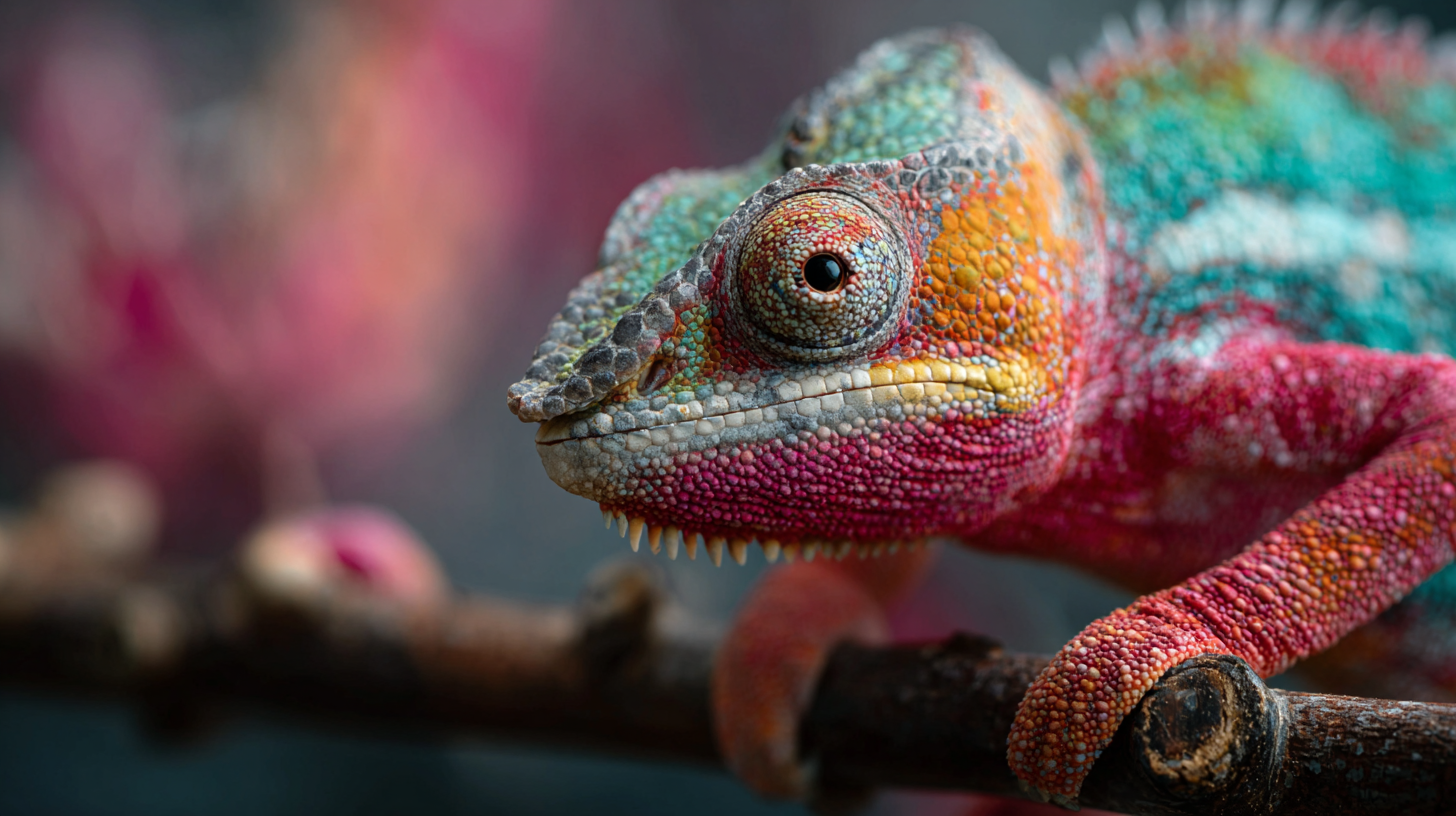
The flaw of static design
Honestly, when I see a paint job, I see a beautiful surface that simply gave up. We’ve relied on simple dyes and pigments for centuries. But those colors are static; they fade; and they cost energy to create. Our architecture and materials are fundamentally passive. Exploring the innovative field of “Structural Color Metamaterials Design” promises a shift towards more dynamic and energy efficient solutions.
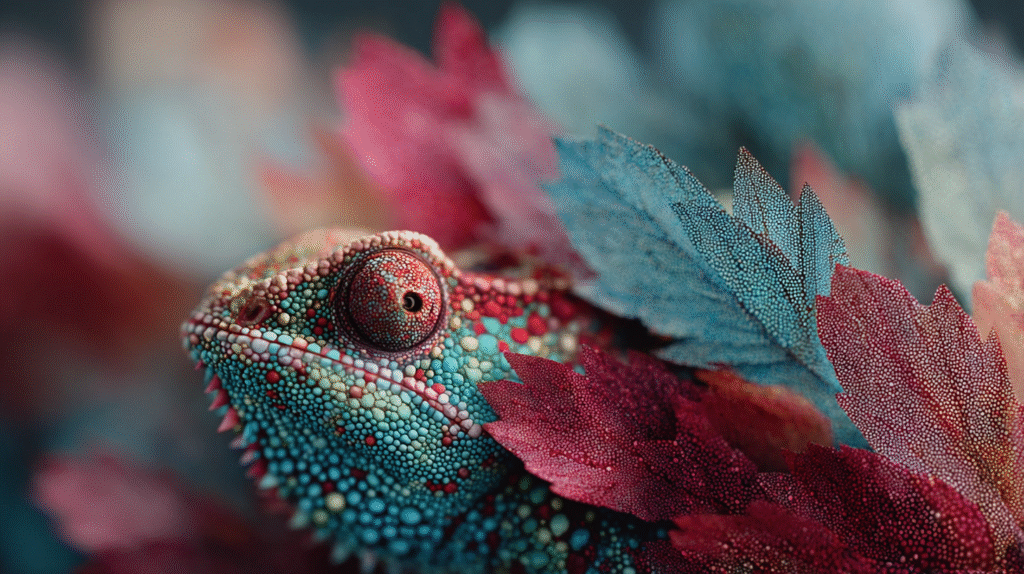
The chameleon, however, is pure, vibrant, fluid efficiency. It shows us that color is not a material problem; it’s a structural problem. We must decode this biological mastery to design materials that are dynamically responsive.
Color as geometry
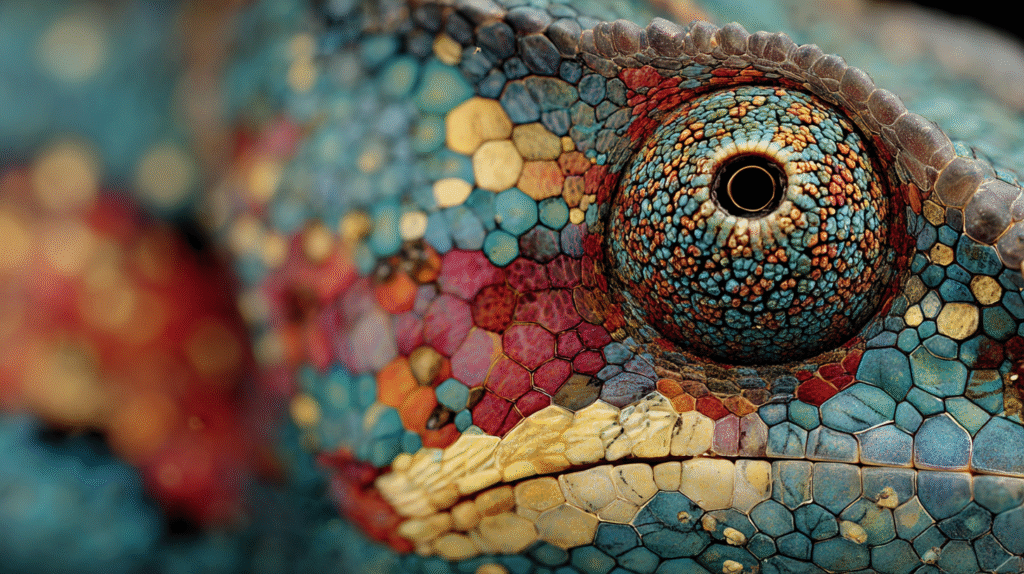
Here’s the wild secret: The chameleon doesn’t use paint. Actually, it uses architecture and light. Its skin is powered by specialized cells called iridophores. Think of them as tiny, natural perfectly aligned microscopic prisms.
Inside these prisms, the skin holds an array of photonic nanocrystals which are perfectly aligned microscopic prisms. To shift color, the chameleon performs a masterstroke of physics. It doesn’t alter its chemistry at all! Instead, it rapidly adjusts the physical space, the lattice, between those nanocrystals. This change instantly and physically alters how light waves are reflected. It works like tuning an optical filter at the nanoscale or the precise filtering of a photon through a diffraction grating. The geometry itself is the color generator.

This is the ultimate breakthrough: Structural Color. Because the color is generated by physics, it’s immune to fading and costs virtually zero energy to maintain. It is a masterpiece of elegant, physical design, and also a mandate for highly efficient, zero-loss coloration in materials.
Designing the smart skin
Bio engineers and scientists are building active, intelligent materials by replicating nature’s most sophisticated geometries, resulting in huge gains in energy efficiency and control for architecture and also defense.
The ultimate goal here is immediate, visual transformation. Imagine a surface that instantly responds to its environment! To do this, engineers develop flexible materials, often hydrogels or polymers. They embed these materials with synthetic photonic crystals.
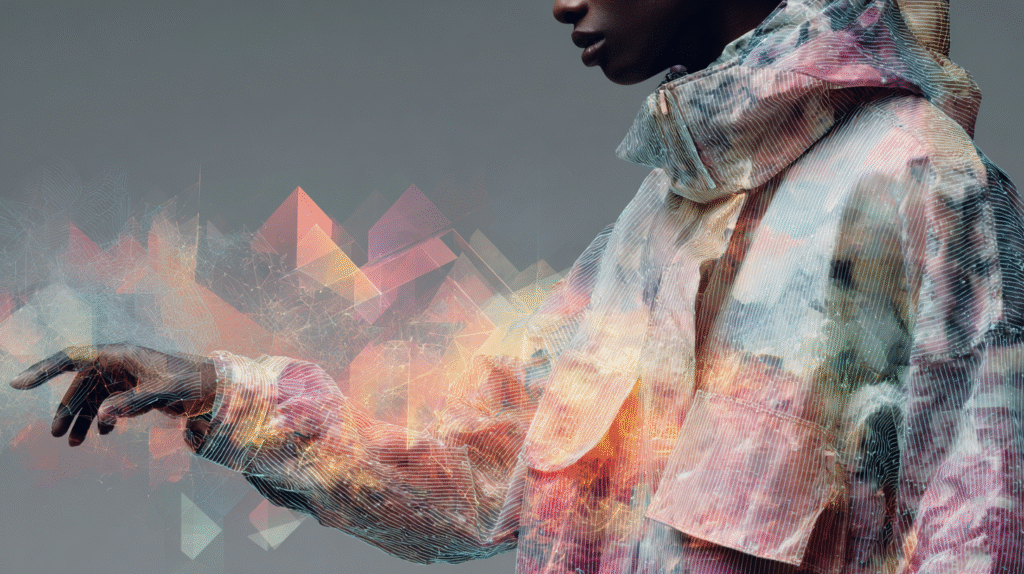
When we apply an electrical signal or heat, the spacing between those crystals changes. The material instantly and fluidly shifts its visible color. This is the result: self-adjusting architectural façades, active camouflage for vehicles, or massive, zero-maintenance digital displays that remain vibrant, even in direct sunlight.
The invisible hack: stealth and energy efficiency
The chameleon’s genius extends far beyond changing a color for camouflage. We realized its true power lies in controlling the entire electromagnetic spectrum. That presents us with a huge engineering challenge: How do we build materials that can be transparent one moment and invisible the next?
This is where the Mimétique Solution shines. Engineers solved this not with chemistry, but with structure. We developed tunable metamaterials. Those are intricate, 3D printed microscopic truss structures that directly mimic the physical way the chameleon adjusts its skin’s lattice.
Then, by precisely collapsing or expanding this tiny architecture, we can switch the material’s function instantly. It’s not magic. Instead, it’s a physical toggle leveraging pure physics!
This material gives us two revolutionary modes: Absorption Mode, where it absorbs over 90% of radar waves, effectively achieving stealth for aircraft or vehicles. And Transmission Mode, where it allows crucial communication signals to pass through instantly when needed.

This is the strategic leap. The chameleon taught us how to use simple physical structure to dynamically control powerful energy waves, giving us the key to next-generation defense and sustainable energy control.
Dynamic control
The chameleon teaches us that passivity is obsolete in 2025 and that geometry is the most powerful tool for control. We must abandon the era of static, pigment-based materials. Investing in the Mimétique Code for structural color and dynamic tuning is the strategic mandate for leaders in energy efficiency, defense, and sustainable architecture.
Disclaimer: This content is for informational and educational purposes only and reflects conceptual analysis, not professional engineering or financial advice.
Leave a Reply