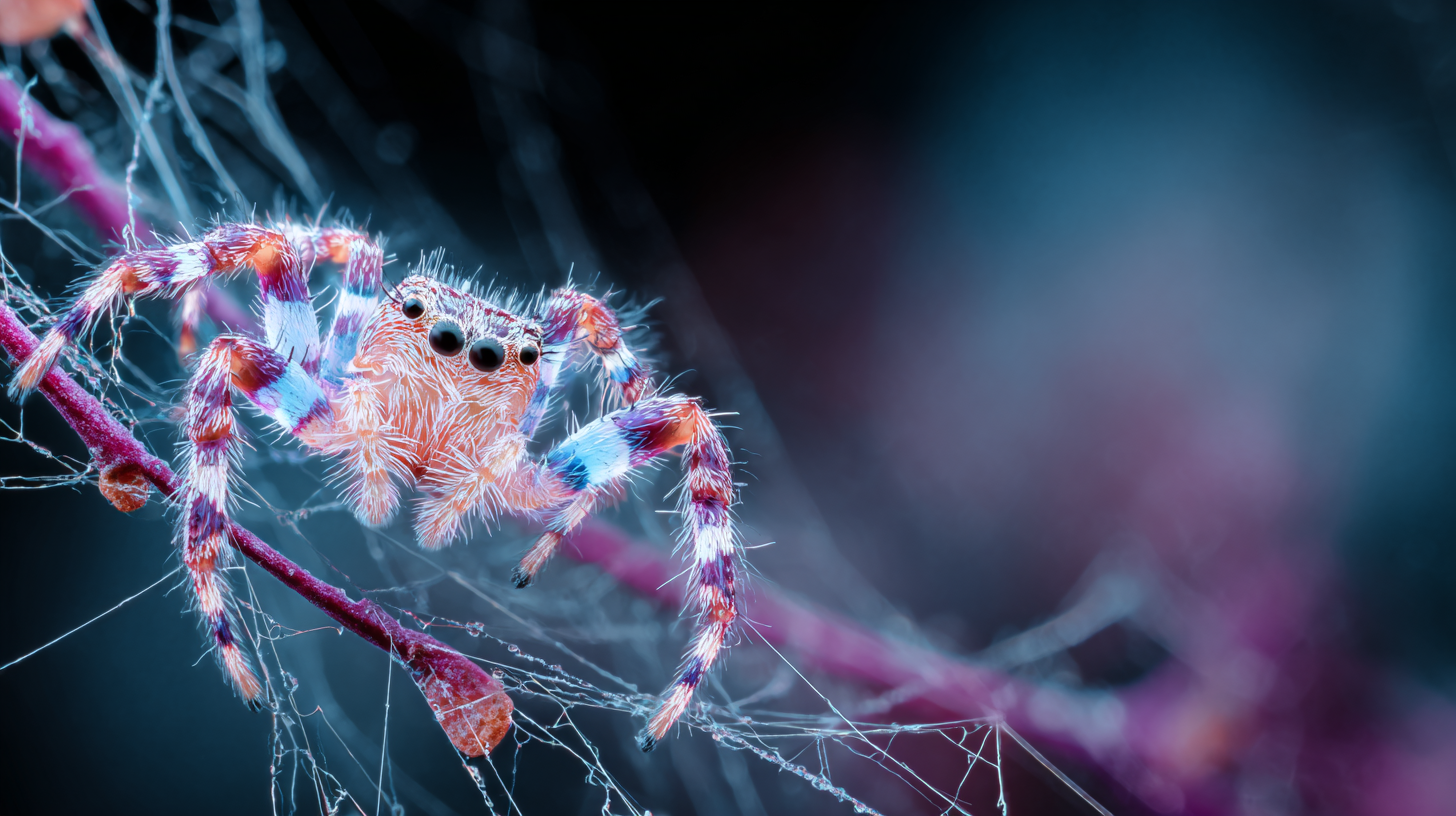
When I see a jumping spider, I’m questioning how they do it! The spider engineering hydraulic secret is key to their impressive leaps. They seem like nature’s tiny, overachieving superheroes. But what they do isn’t just power, it is the ultimate demonstration of working smarter, not harder!
This little family of arachnids, the Jumping Spiders (Salticidae), is our inspiration today. Why? Because they can leap up to 70 times their own body length in a second! Seriously, think about all that leg power!
Here’s the wild part: The spider achieves this explosive power while consuming a minimal energy footprint. This means that this jumping spider achieves its powerful movement while consuming a very small amount of biological energy (food/metabolism) compared to the amount of mechanical work it performs.
Why is that? They solved the fundamental engineering problem we still grapple with: weight.
The Mimétique Code: nature’s hydraulic hack
The secret is surprising. The spider actually lacks extensor muscles in its legs. Instead of burning energy 24/7 on bulky motors, it relies on a specialized internal hydraulic system.
The system is pure genius: leg extension is powered by rapidly increasing the internal hemolymph pressure (that’s spider “blood,” but way cooler!). Muscles are only used to pull the legs back in (flexing).
This means the spider can hold a stable position, like clinging to a wall, perfectly still, with zero energy expenditure.
The engineering clutch
In engineering, a clutch engages and disengages power. In robotics, an actuator (like a motor or a piston) typically needs continuous power just to hold a position against gravity or resistance. And so, if you turn the power “off” then the system collapses. But here, the spider’s hydraulic system acts as a non-backdrivable clutch. Once the internal fluid pressure extends the legs, the mechanical structure locks into place. It’s the ultimate “power-off” clutch!
The biological genius (power-off)
The spider’s legs lack the heavy, energy draining extensor muscles that other animals use. Instead, the pressure of its hemolymph (body fluid) does the work. And because the fluid pressure locks the joint, the spider can cling to a wall or hold a jumping position without continuously contracting muscles. It consumes zero metabolic energy to maintain that stable, powerful state.

By swapping heavy, constantly-running motors for a small, pressure-driven fluid reservoir, the spider achieves an incredible power-to-weight ratio. That is the Mimétique Code for efficiency.
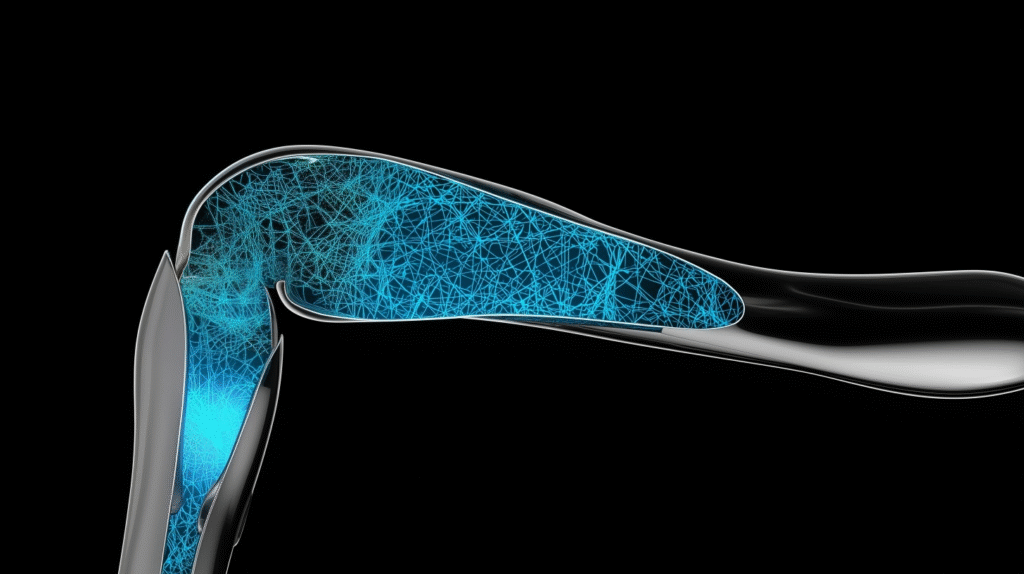
Soft hydraulic joints
Bioengineers now take this efficient designs and translate them directly into our machines. We are building the next generation of soft actuators for lightweight and versatile robots.
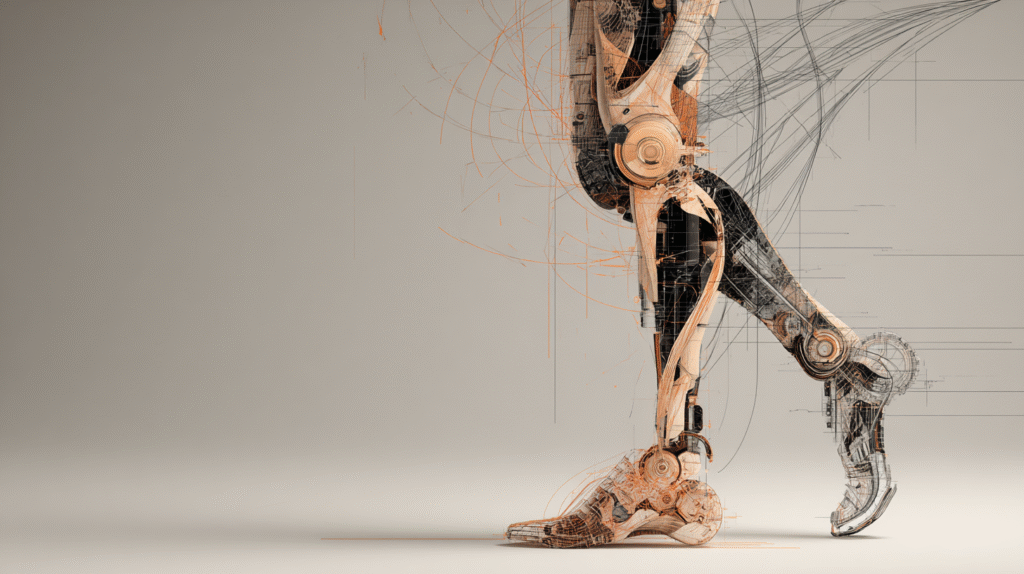
The innovation? Spider-Inspired Electrohydraulic Soft Joints or also called SES Joints.
These joints are genius! They mimic the spider’s leg anatomy. Think of them as flexible pouches. We fill them with a liquid dielectric, yes, often just vegetable oil! These pouches replace all those heavy, complicated gears and motors we used to rely on.
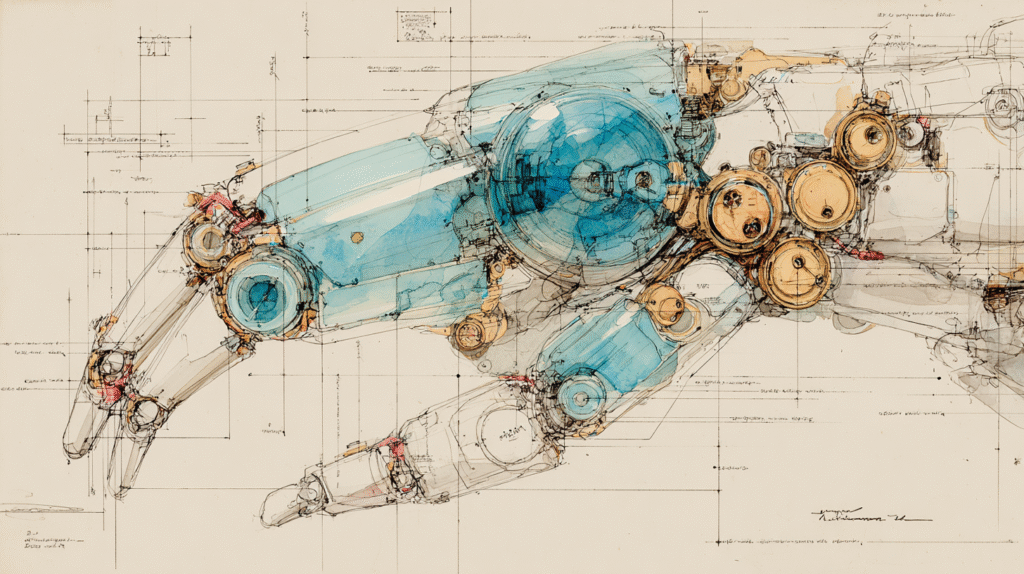
And here’s the trick: we apply a high, electrostatic voltage to the pouch. This tiny electrical pulse causes the fluid inside to shift rapidly. That shift generates immense hydraulic power and extends the joint in a burst. It’s simple, powerful, and completely replaces the bulky, energy-hungry extensor muscle. Fluid power wins again!
Strategic applications
This tiny hydraulic system isn’t just biology; it’s a direct solution to some of our biggest headaches. It solves critical problems in three high-value areas, all by eliminating the need for continuous battery power.
Exploration Robotics

Think planets, disaster zones, or complex terrains. Soft jumping robots, already leaping ten times their height, gain freedom. They can traverse any ground without relying on heavy batteries for sustained power. We give them endurance.

Prosthetics and wearables
We build lightweight, compliant joints. These systems allow for truly compliant interaction with humans, minimizing damage during unexpected movements. We make wearable tech safer and more versatile.
This hydraulic leap is how we build the next generation of robots: lighter, stronger, and fundamentally more resilient.
Biomechatronics: where biology becomes engineering
The work of translating the jumping spider’s leg into a soft robotic joint is not merely biomimicry, it is the field of Biomechatronics.
This field represents the ultimate convergence of biology, mechanics, and electronics. It is the discipline dedicated to designing machines and systems that function as living organisms.
The goal of this discipline is to understand the natural control, sensing, and actuation mechanisms of life (like fluid-driven legs) and integrate them into durable, efficient machines (like our new soft actuator!).
Biomechatronics is the strategic pathway to the next era of robotics. It moves us past traditional motors and rigid joints and towards lightweight, resilient, and power-efficient systems. For any leader in R&D, this is the future of hardware development!
The spider-jump teaches R&D teams a powerful lesson: actuation should be a single, fluidic event, not a continuous mechanical battle against gravity.
This Mimétique Code for hydraulic actuation provides a compelling, immediate blueprint for building the next generation of lighter, more powerful, and ultimately, more resilient robots that can operate independently and efficiently.
Disclaimer: This content is for informational and educational purposes only and reflects conceptual analysis, not professional engineering or financial advice.
Leave a Reply