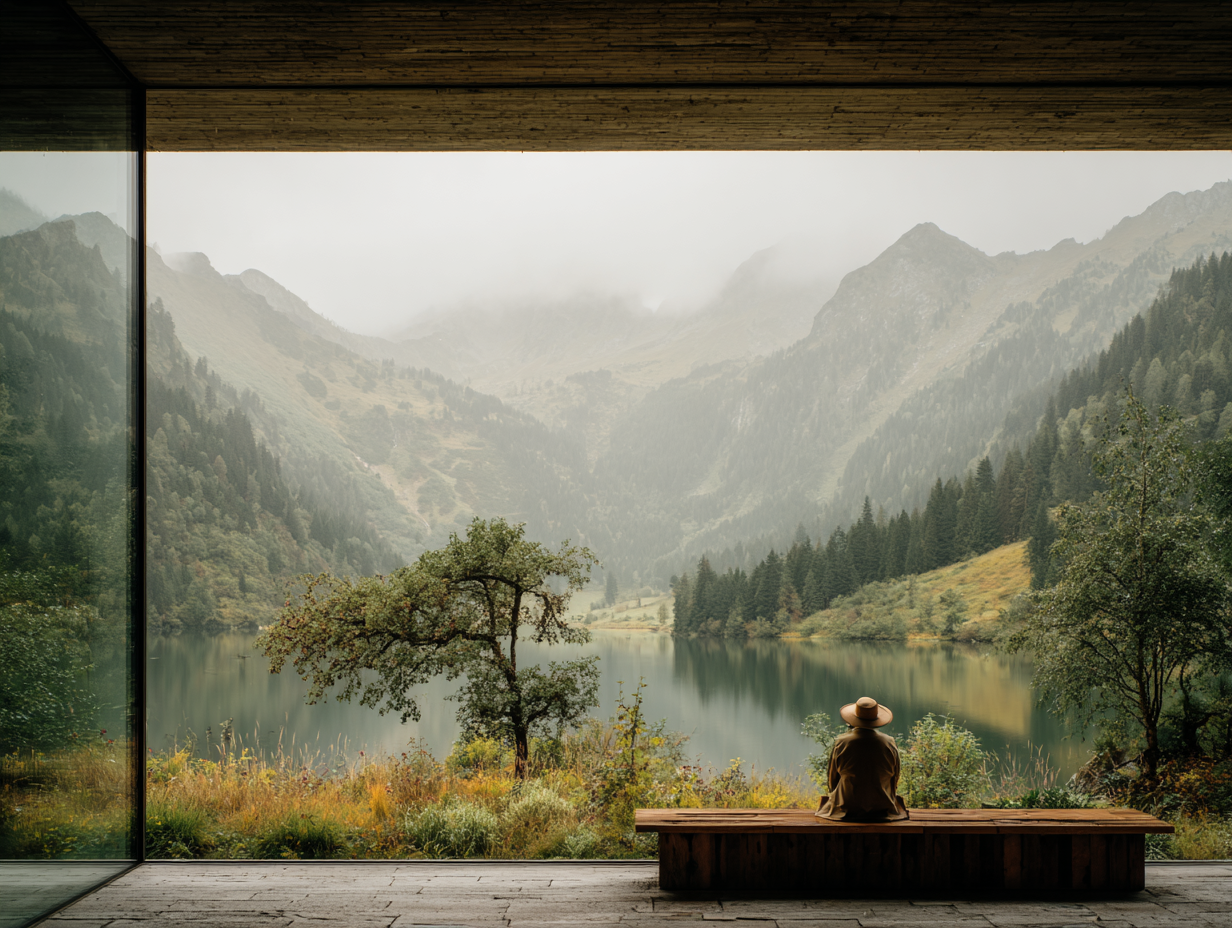
You might wonder: how does studying a tree or a bird actually translate into better personal well-being? In many ways, biomimicry reduces stress by applying nature’s strategies to human lives. It seems to come down to two powerful, strategic principles: Biophilic Flow and Engineered Safety.
This whole concept is about engineering environments that genuinely work with human nature, instead of constantly fighting against it. We are actually wired to feel secure under certain specific conditions. Evolution has spent millions of years perfecting these biological blueprints. When our engineered world finally mirrors those ancient designs, the results are truly profound. We see a measurable increase in everyday calm and happiness.
Listen now to hear this discussion by two AI-minds that is shaping the next wave of architecture of calm!
1. Biophilic flow: the natural path to calm
Here is the key insight from biomimicry: the human mind deeply craves the structure and predictability found everywhere in nature. And, Biophilia is that innate human need to connect with the natural world. It is the absolute core of excellent design.

Think about buildings that use natural materials, incorporate flowing forms, or let in natural light patterns. They aren’t just aesthetically pleasing. They are scientifically proven methods to reduce your stress and boost your cognitive function.
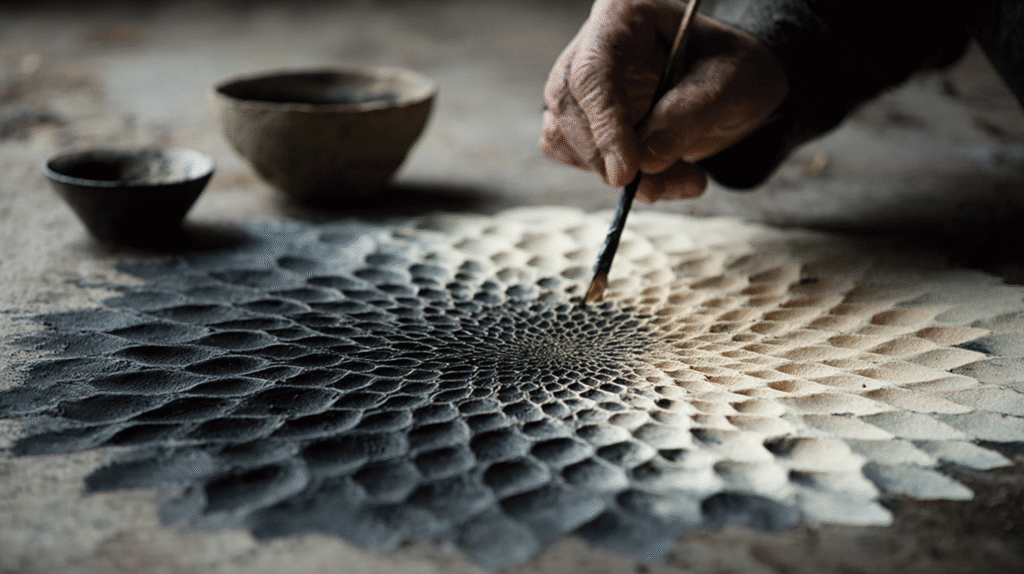
Now, consider the fractal pattern. Look closely at a coastline, the intricate fronds of a fern, or the branches of a tree. These are complex shapes that repeat themselves at different scales. Therefore, when designers integrate this fractal geometry into human spaces, such as hospital tiling or skyscraper glass, something amazing happens. Non surprisingly, studies show that this recognition reduces stress by up to 60%. This is an inspiring thought: our brain instantly recognizes this ancient, energy-efficient pattern and processes the environment as organized and safe.
Furthermore, just creating an unobstructed view of nature fulfills a core evolutionary mandate. It relates to survival safety and resource assessment. Wouldn’t you instinctively feel better in a sunlit office with organic, flowing sightlines than stuck inside a featureless fluorescent box?
2. Engineered Safety: The Termite Mound Principle
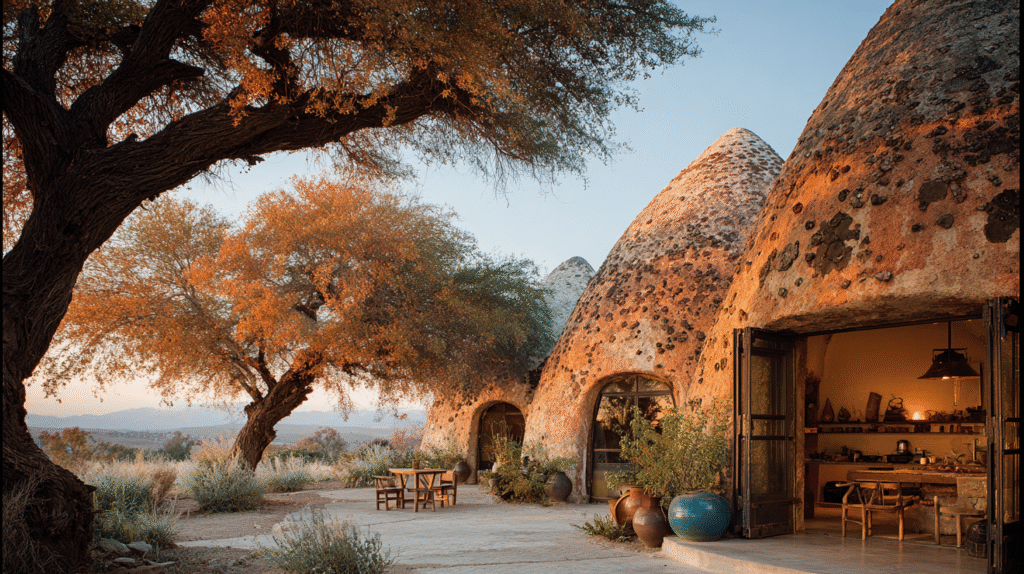
Safety and comfort are often found in passive, hidden systems, the designs we don’t even notice. The African termite mound is the perfect model for engineering effortless comfort.
Termites are masters of passive thermal regulation. Their mounds maintain a stable, cool temperature inside, despite the brutal heat fluctuations of the savanna. They achieve this with an intricate network of tunnels and vents that utilizes the natural flow of air.
When architects translate this into a modern building, the result is architecture that:
- Reduces Stress: The constant, silent thermal stability removes a cognitive irritant (being too hot or too cold), allowing people to focus.
- Cuts cost: By using natural, passive airflow instead of energy-intensive HVAC, buildings like the Eastgate Centre in Zimbabwe reduce significantly their energy consumption.
This is the beautiful synergy of the Mimétique Code: designing a system that is financially profitable for the business while being fundamentally comfortable for the user!
The mandate for everyday happiness
Designers’ goal today is clear: treat human well-being as a non-negotiable design specification! By consciously translating nature’s proven solutions, from the geometry of a seashell to the ventilation of a termite mound, we move beyond merely addressing human needs and begin designing a world that actively supports human happiness.
The most successful innovations of the future will be the ones that are perfectly aligned with both nature’s flow and the human spirit.
The Mimétique Code in Motion: Watch our deep dive into the Architecture of Calm blog post.
Conceptual Exploration Disclaimer: This strategic analysis is a conceptual model, offered for thoughtful discussion as part of our platform for shared learning, not certified professional advice. Any application of these principles is undertaken solely at the user’s risk, as detailed in our full Terms of Service.
References:
Robles KE, Roberts M, Viengkham C, Smith JH, Rowland C, Moslehi S, Stadlober S, Lesjak A, Lesjak M, Taylor RP, Spehar B, Sereno ME. Aesthetics and Psychological Effects of Fractal Based Design. Front Psychol. 2021 Aug 17;12:699962. doi: 10.3389/fpsyg.2021.699962. PMID: 34484047; PMCID: PMC8416160.
Taylor RP. The Potential of Biophilic Fractal Designs to Promote Health and Performance: A Review of Experiments and Applications. Sustainability. 2021; 13(2):823. https://doi.org/10.3390/su13020823
Leave a Reply