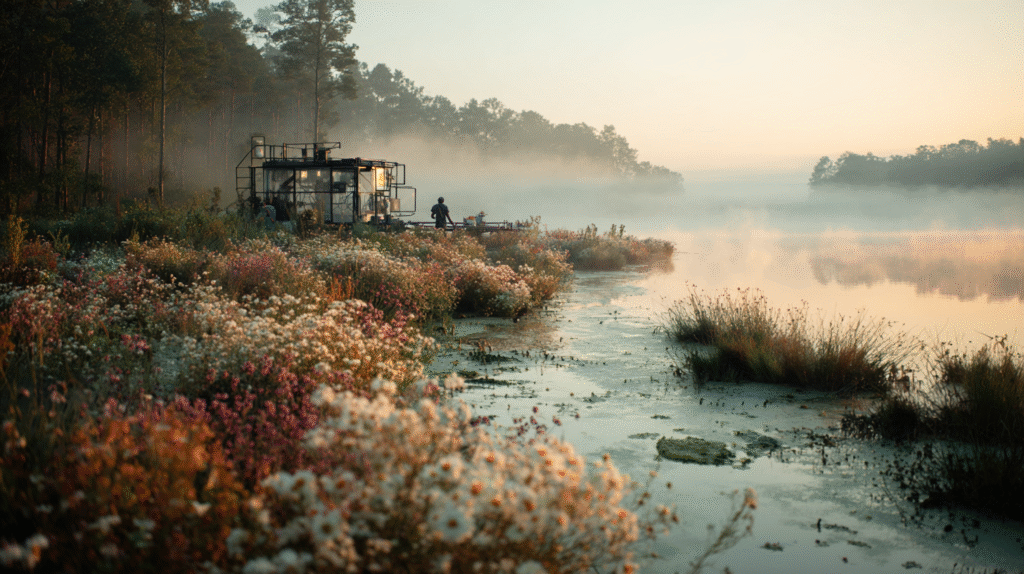
Honestly, I used to think the biggest, coolest innovations came from humans in lab coats. I was wrong. Our planet? It’s already the ultimate design firm, and bioengineering? We’re just the students taking notes!

My curiosity led me to ask a crazy question: What if the solution to our biggest global challenges, like clean water, was already quietly humming beneath the waves?
Meet the ecological heroes (and their superpowers)
It turns out, some of the world’s greatest environmental engineers don’t even have PhDs. They have shells or mucus nets. They are the Unsung Heroes, and they’ve been perfecting life-saving technology for millions of years.

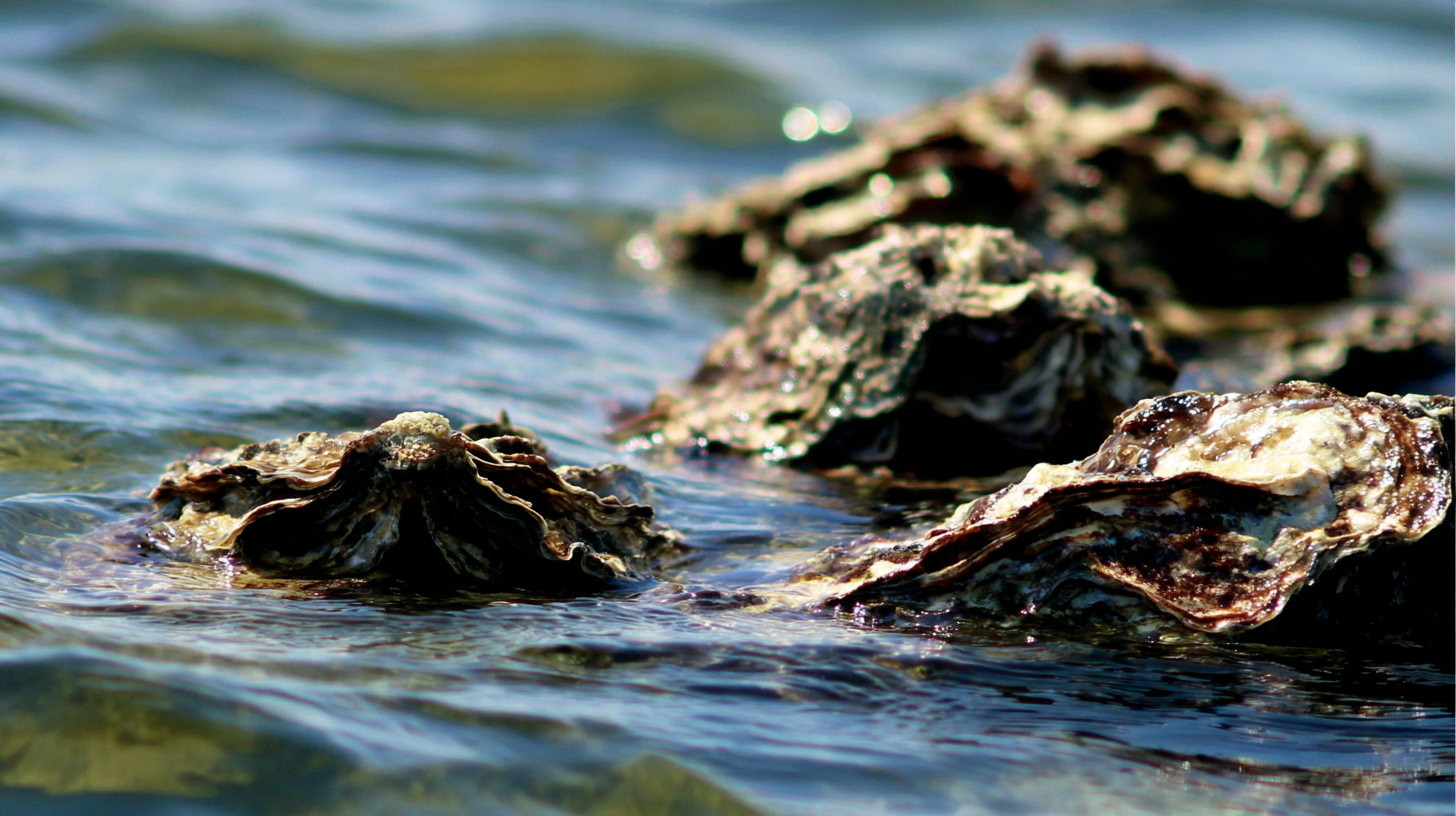
The humble oyster: my filtration guru
Imagine trying to clean up a coastal ecosystem polluted by fertilizer runoff and sediment. It sounds like a job for a massive, expensive machine, right? Nope!
- The Hero: The unassuming Oyster.
- The Secret: It’s a filtration genius. A single oyster seems to quietly polish up to 50 gallons (or 180 liters!) of water a day! They’re not just clearing things up, either.
- The Real Magic: They absorb excess nitrogen, that nasty pollution from farms and either bury it harmlessly or turn it into shell. They are the ultimate, cost-effective wastewater treatment plant that runs on its own power. We’re talking natural, sustainable cleaning!

The larvacean: the deep-sea climate warrior
You think carbon capture is a new idea? Not for this little guy! My curiosity about the deepest oceans led me to this bizarre, yet brilliant creature: the Giant Larvacean.
- The Hero: A tiny, tadpole-like thing that lives deep below the surface.
- The Secret: It builds a massive, elaborate mucus net, a beautiful, fragile castle of slime, to filter its meals. This simple act is a critical part of the biological carbon pump, actively scrubbing carbon from the upper ocean. The lesson? Distributed, disposable systems are often more efficient than massive, centralized machines
- The Real Magic: When the net is clogged, it’s not just trash; it’s loaded with carbon-soaked debris. The Larvacean simply discards the whole mess, and it sinks to the seafloor. This simple act is a critical part of the biological carbon pump, actively scrubbing carbon from the upper ocean and helping to stabilize our climate. A tiny hero making a massive global impact!
The technological partners (learning from nature’s homework)
The moment bioengineers truly became powerful was the moment we became humble students of nature. We realized we shouldn’t try to reinvent the wheel; we should just learn how the wheel was made! This is the core of biomimicry and what we present with the Mimétique Code.
Aquaporin membranes: water, hold the everything else
I was blown away when I learned that the best water filter isn’t a complex material, but a protein found in every living cell.
- The Lesson: Cells need to control water flow perfectly. They use Aquaporin proteins, nature’s perfect, tiny channels, to let pure water molecules zip through while rejecting nearly everything else. It’s ultra-selective!
- The Innovation: Bioengineers have started integrating these natural proteins into synthetic membranes. The result? Energy-efficient, low-pressure filters that perform better than most traditional systems. We simply took nature’s cellular plumbing and scaled it up!
Check out our previous blog post where we deep dive into Aquaporin membranes!
The Manta Ray filter: clog-free genius
If you’ve ever dealt with an industrial filter, you know the biggest headache is clogging. Guess who solved that problem eons ago? The magnificent Manta Ray!
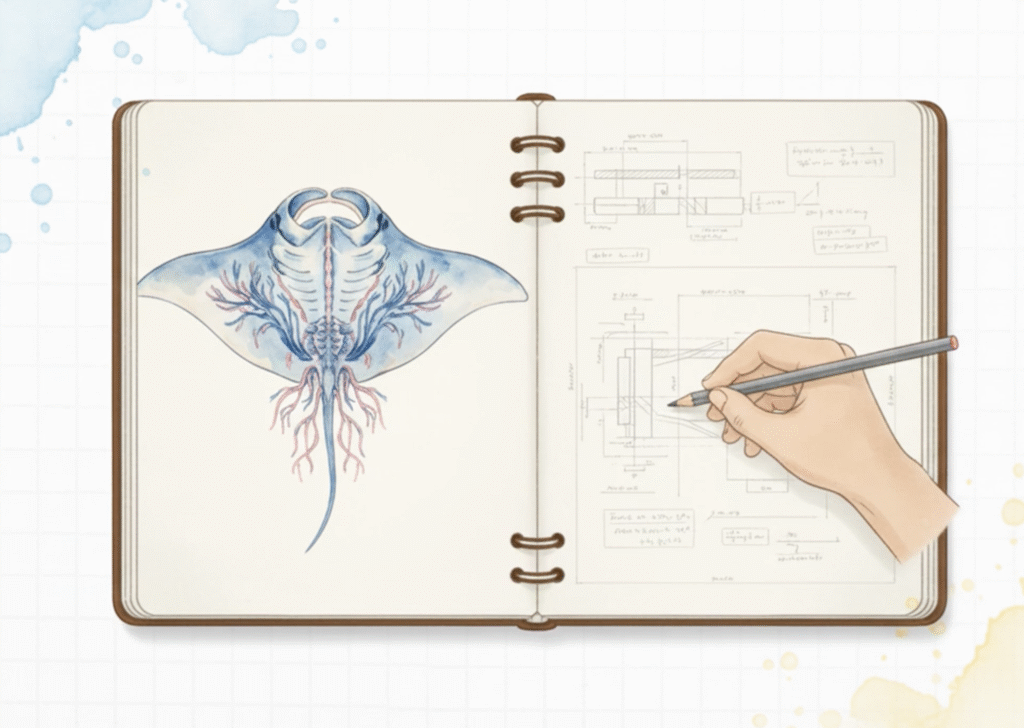
- The Lesson: The Manta Ray’s mouth is lined with specialized filter plates that snag plankton but let water flow smoothly through the gills without getting clogged. How? Fluid dynamics!
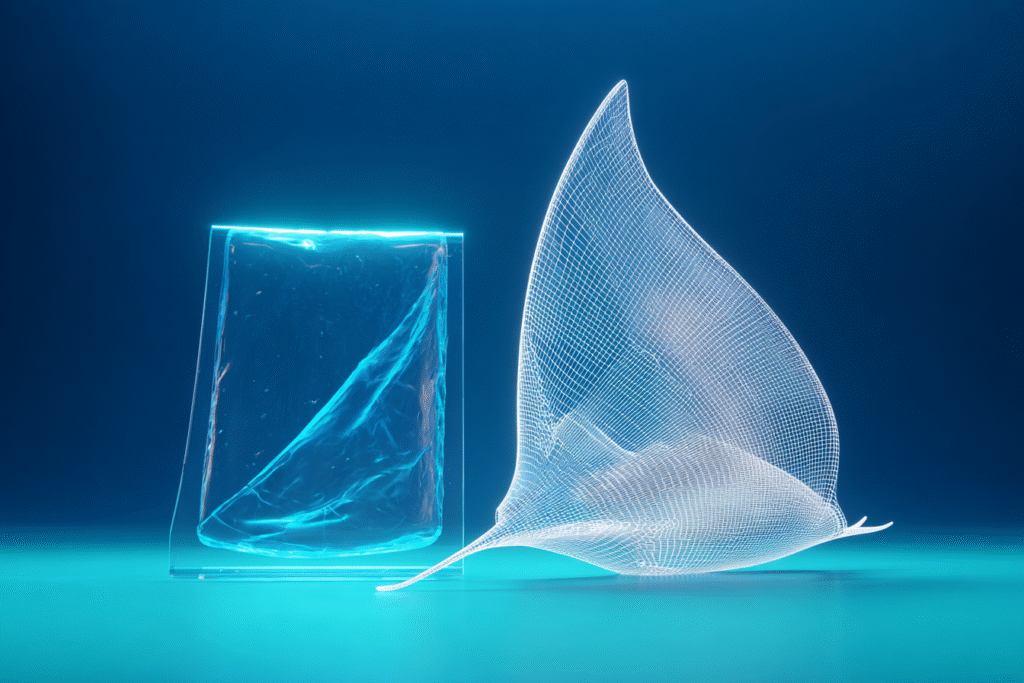
- The Innovation: Engineers studied this structure and found it creates a tiny vortex inside the filter channels. By mimicking this natural design, we can create industrial filters that are incredibly clog-resistant, a huge efficiency gain for everything from water treatment to manufacturing.
Check out our previous blog post where we deep dive into Manta Ray’s filter invention!
The takeaway: curiosity is the ultimate tool
What’s the true inspiration here? It’s the realization that some of the world’s most elegant, efficient, and sustainable technologies are already living systems. Bioengineering isn’t about replacing nature; it’s about partnering with it.
So, the next time you look at an oyster or a weird deep-sea creature, remember: you’re not just seeing an animal. You’re looking at a masterpiece of design, a blueprint for a better, cleaner world.
Disclaimer: This content is for informational and educational purposes only and reflects conceptual analysis, not professional engineering or financial advice.
Leave a Reply